Improving Loan Change Experience for Customers and Advisors in Finland
After a year of improving Danske Bank’s Swedish loan systems, I took ownership of a new challenge rethinking the loan change experience for the Finnish market.
Unlike Sweden, Finnish advisors were still using legacy systems, manually managing requests across multiple tools and emails. Customers also struggled: unclear language and outdated flows led to frequent errors, forcing advisors to correct and reprocess cases.
This initiative aimed to bring the same level of innovation and automation achieved in Sweden to Finland but adapted to the local market. Over 3 months, we redesigned both the customer-facing flow and the advisor tools, laying the foundation for a fully automated loan change process.
Danske Bank
Denmark, Copenhagen
5 October 1871
Financial instituction
DKK 23.6 billion in 2024
20,000+
Challenge
Finland is one of Danske Bank’s strongest markets, and improving customer experience here was a key business priority.
The mission was simple:
Automate as many loan change processes as possible.
Reduce advisor workload by improving customer-side data accuracy.
Align customer and advisor systems under one shared logic and structure.
Results
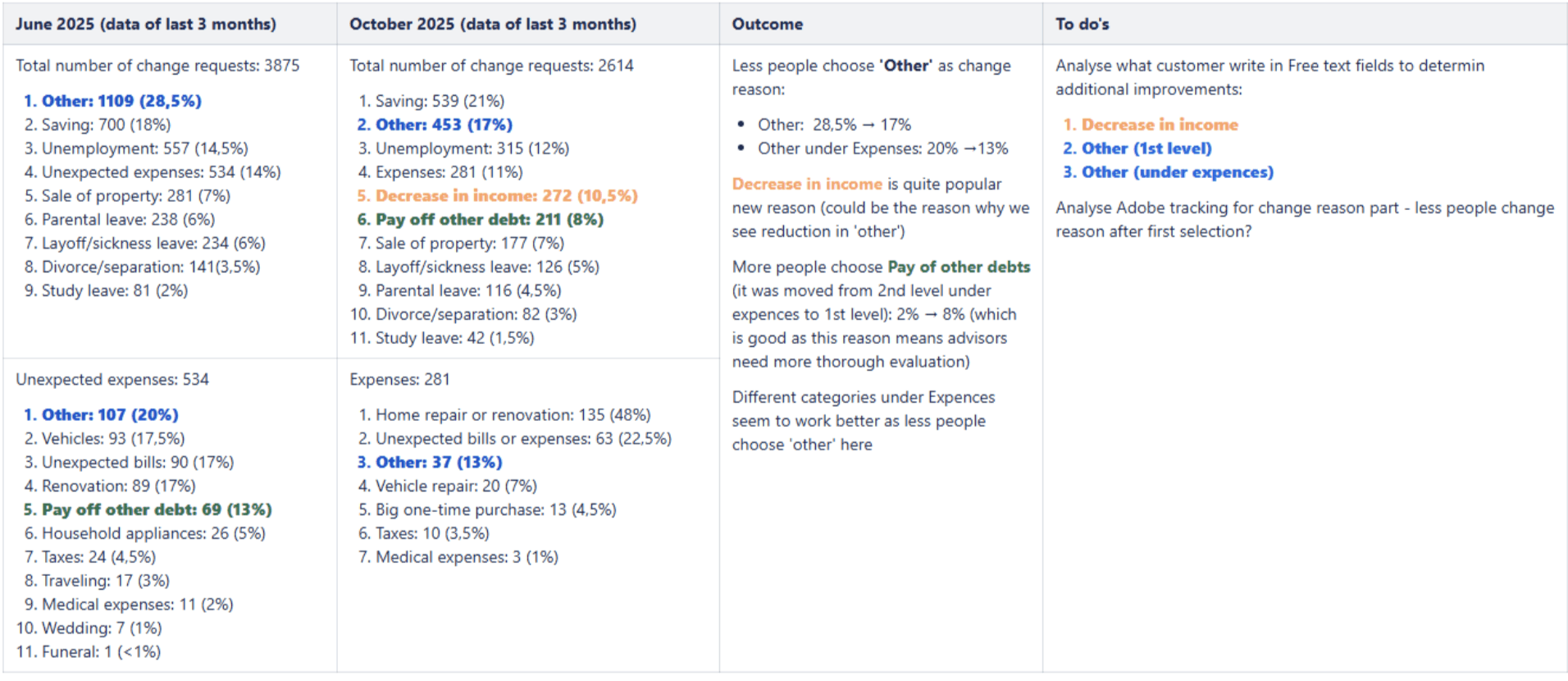
We reduced customer input errors by more than half, cutting “Other” selections from 28.5% to around 17%.
Advisors now save 2-15 minutes per case thanks to improved data accuracy and automation readiness.
The new advisor platform is already streamlining workflows and setting the foundation for a unified loan change system across Nordic markets.
11.5%
Fewer customers choose "other"
2-15min
Saved time per case
40%
Of case handling now automated
Process
Step 1 – Fixing the Root Cause
We started by focusing on the customer side, since automation depends on receiving clean and accurate data.
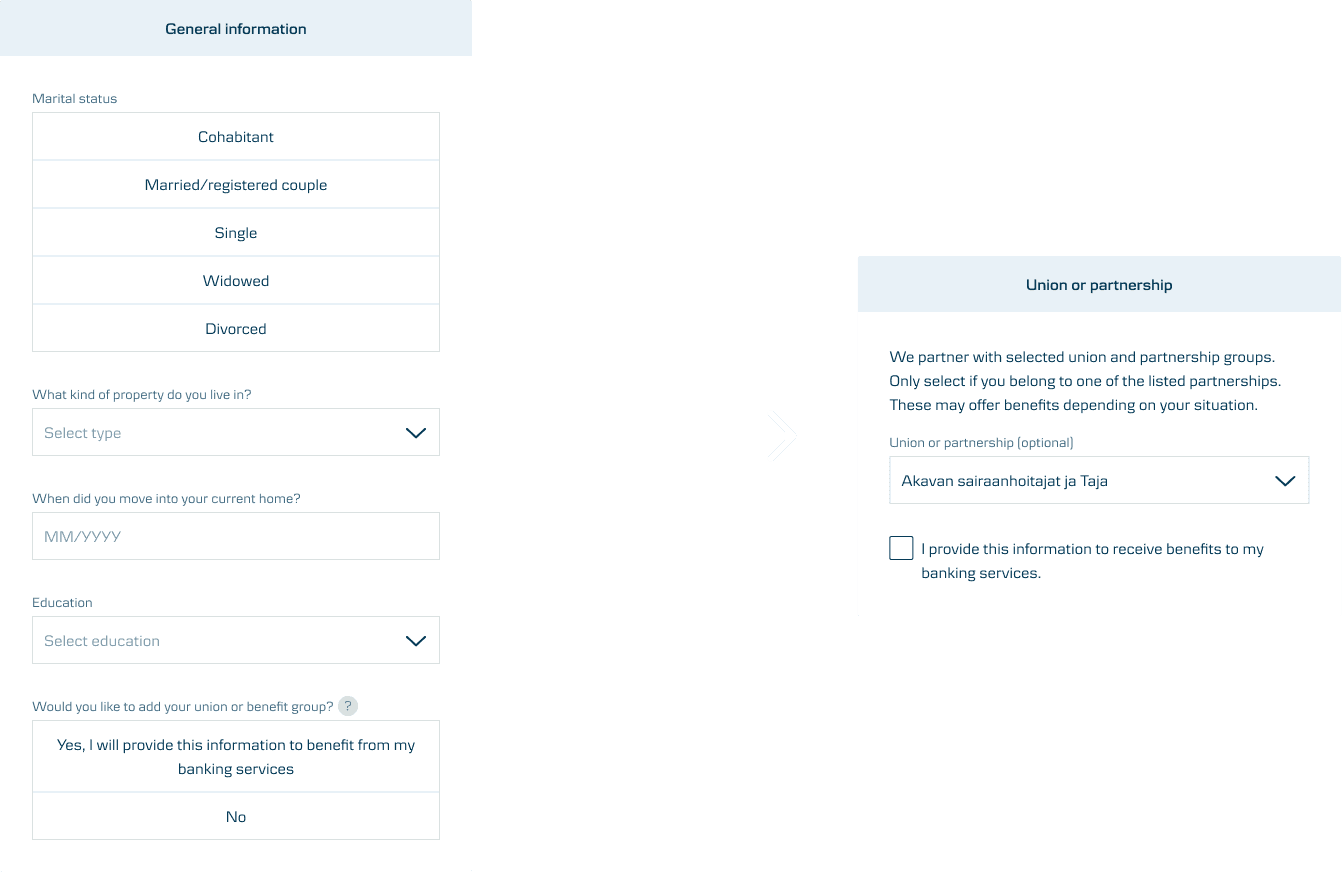
The first issue came from a section called Customer Partnership. Customers were always asked to state which union or partnership they belonged to — even when we already had this information in our systems.
Many didn’t know the answer, leading to confusion and unnecessary manual verification by advisors. Worse — advisors spent up to 5 minutes per case checking or correcting partnership data, which wasn’t even part of their responsibility.
After several research sessions with advisors and a legal review to validate data handling, we redesigned the logic:
The partnership question now appears only for customers whose data is missing.
When customers enter new partnership data, it’s automatically sent to the correct internal team, not the advisor.
Impact: Advisors saved several minutes per case, and customer confusion dropped immediately after rollout.
In the example below: On the left side we see partnership question included in general information section and on the right side we see how the "Union and partnership" has been separated in it's own section what has been a logical decision to exclude it from general information since it doesn't belong there and with only dropdown enable customer to find their partnership.
Reducing Miscommunication Through Smarter Forms
Next, we tackled the loan change request form, where customers specify why they want to modify their loan.
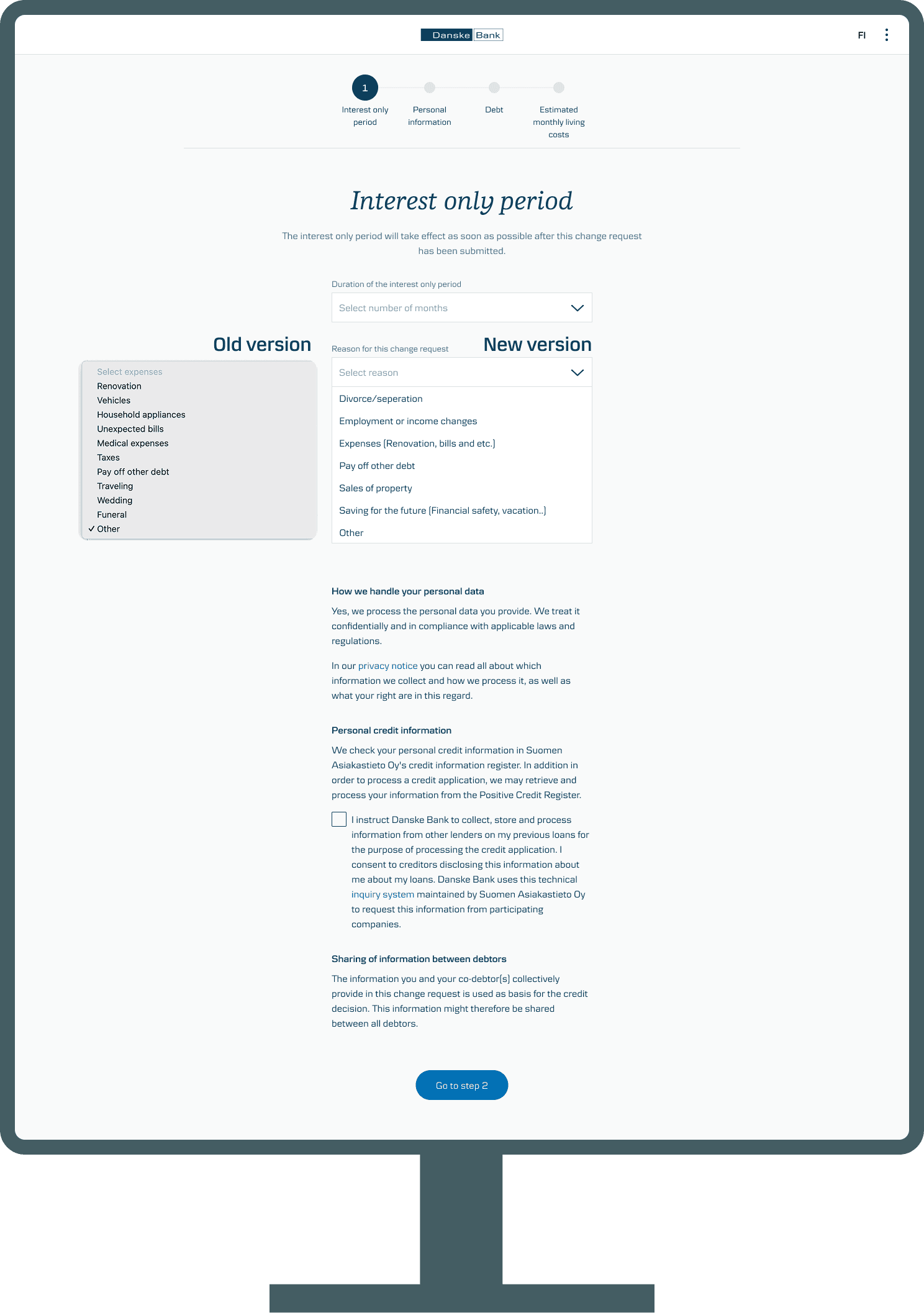
Change requests were divided into: simple changes (like changing payment date) and complex changes (like lowering monthly payments). Depending on a change request, customers always had to state the reason for the change and nearly 1/3 of all customers, 28.5% were chosing the option “Other”, forcing advisors to manually read long comments to understand the actual intent
That single choice made automation impossible.
To fix this, I partnered with our business analyst to analyze a few thousand “Other” cases. We manually read through comments and discovered that most confusion came from terminology — what felt obvious to us internally wasn’t clear to customers.
We reorganized the form:
Reworded unclear options into plain language.
Added missing categories customers frequently described.
Highlighted specific common reasons for changes.
After releasing the update, the percentage of users choosing “Other” in 3 months time dropped from 28.5% to around 17%. This directly enabled us to automate more of the advisor workflow and reduce manual investigation time.
Besides this we have noticed increase in other categories like "Paying other debt" which is always a rejection when it is stated as a reason for the change.
Building the Advisor Platform
Once the customer experience was improved, we turned our focus to advisors.
At the time, advisors were juggling multiple disconnected systems: customer portals, Excel calculators, email threads, and document generators.
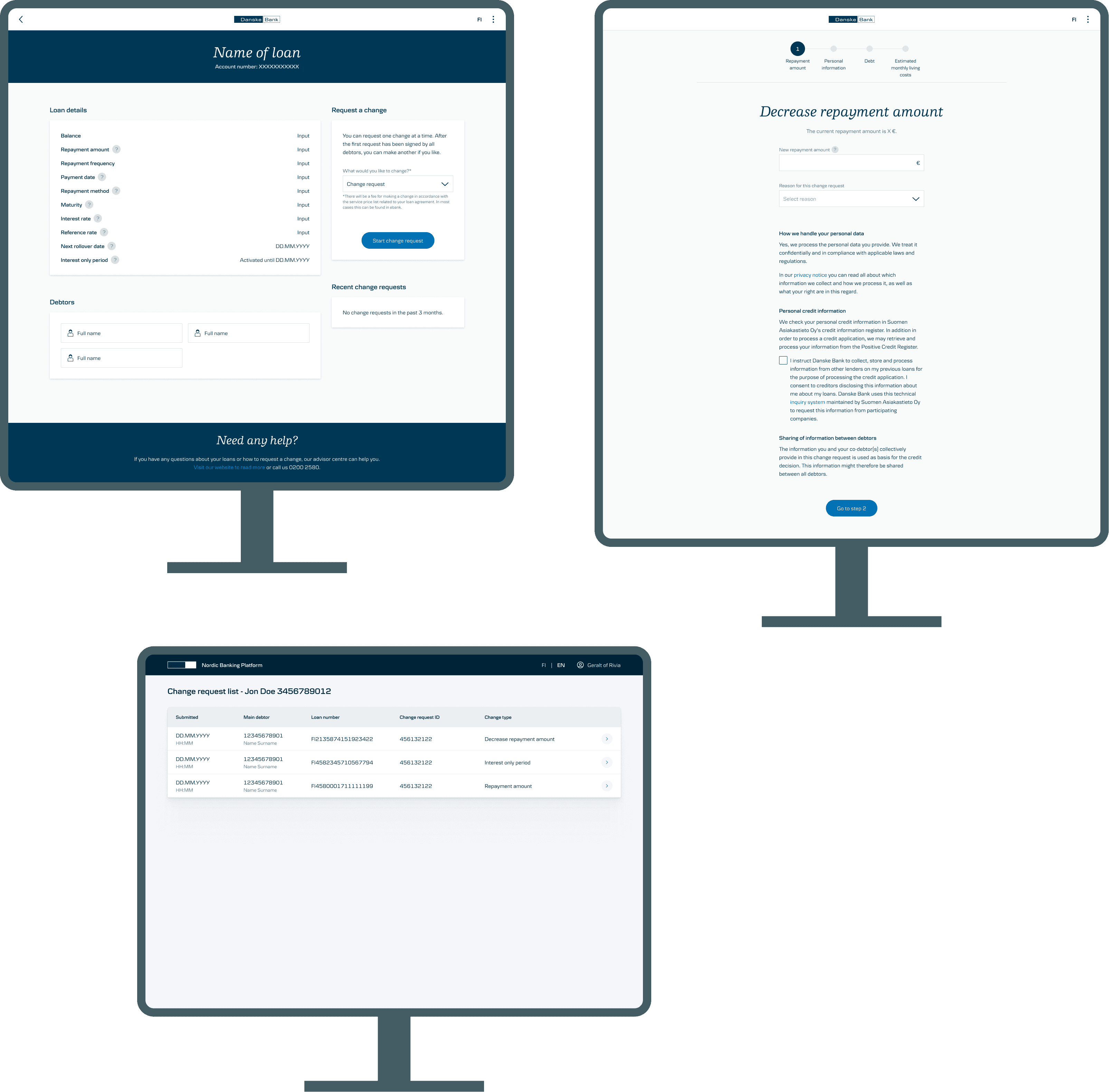
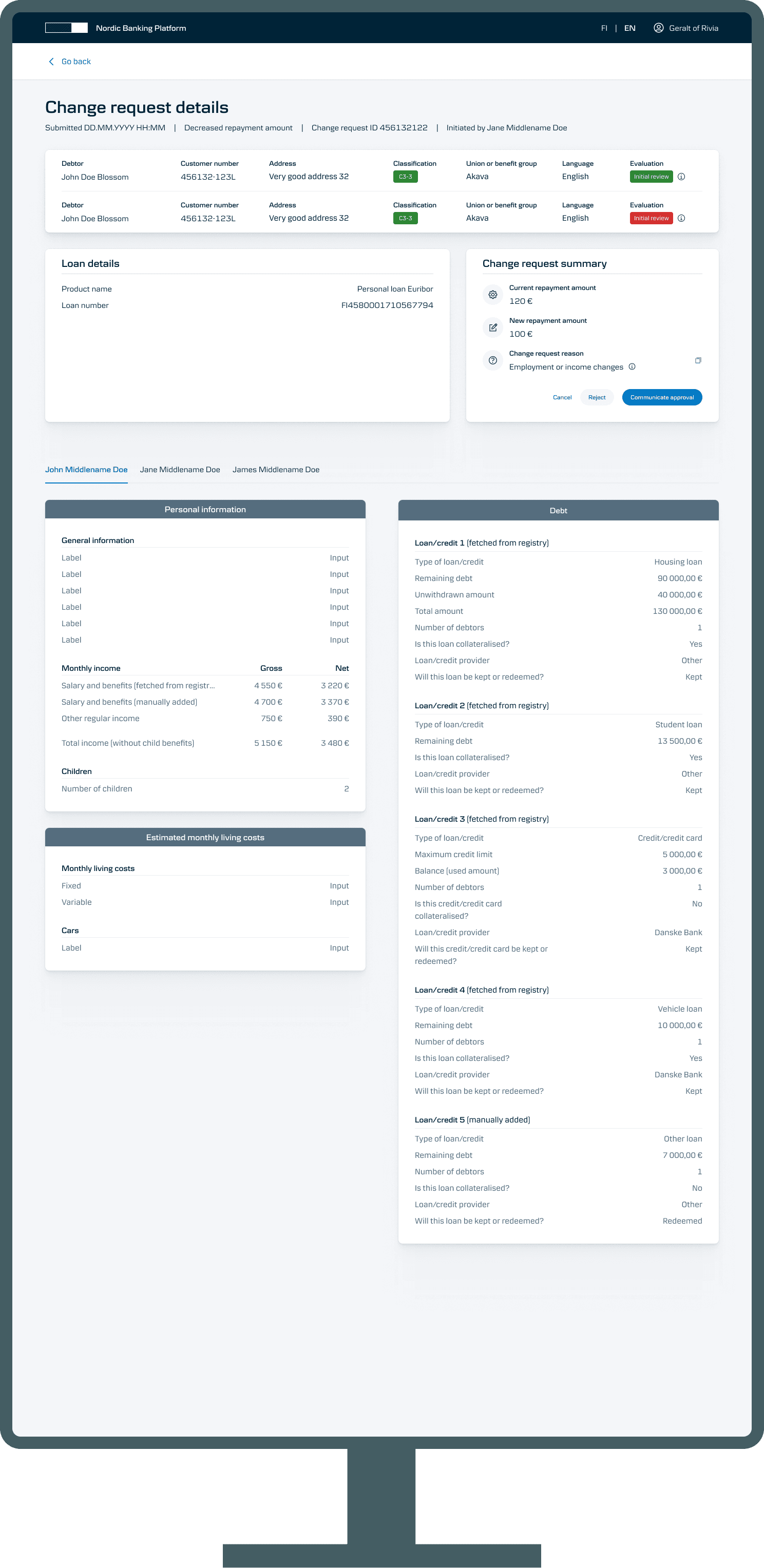
Together with another UX designer responsible for loan applications, I led the design of a new Change Request System for advisors built to align visually and structurally with the loan application tool.
Our goal was to reuse familiar patterns and design components to keep development efficient and maintain cross-system consistency.
Key decisions included:
Aligning API connections so all customer inputs now flow directly into the new advisor system.
Replacing advisor emails with in-system case communication.
Structuring the UI around the logical order advisors follow, so data scanning and case handling became faster and clearer.
Dozens of co-creation and validation sessions were held with Finnish advisors to challenge their workflows and refine our design until it felt effortless and reliable.
Scaling Automation and Finalizing the System
By the end of the three-month phase, we had delivered two key outcomes:
Cleaner data from customers — enabling automation.
Streamlined advisor tools — reducing dependency on outdated systems.
The advisor system is still under development, but early results already show that the new structure improves efficiency, reduces friction, and saves significant time.
As these flows continue to roll out, we’re expanding our design logic into other Nordic markets — gradually standardizing how Danske Bank handles loan changes across all regions.
Conclusion
This project marked a significant step in improving how Danske Bank’s Finnish advisors and customers manage loan changes.
By refining small but critical details — from clearer options and streamlined forms to smarter data logic — we reduced errors, increased automation potential, and made everyday work noticeably smoother for both customers and advisors.
It also taught me that the deepest design impact often begins with language, logic, and structure.
By connecting customer and advisor workflows, I saw how every field, word choice, and interaction can influence not just usability, but also compliance and operational efficiency.
Ultimately, this project reinforced that progress in enterprise UX doesn’t come from sweeping redesigns — it’s built on hundreds of small, intentional improvements that collectively transform how people work and how organizations operate.
Let's work together
I do this for fintech and SaaS teams - taking flows where people drop out or make mistakes and cutting the steps. Currently taking two clients at a time.
Let's work together